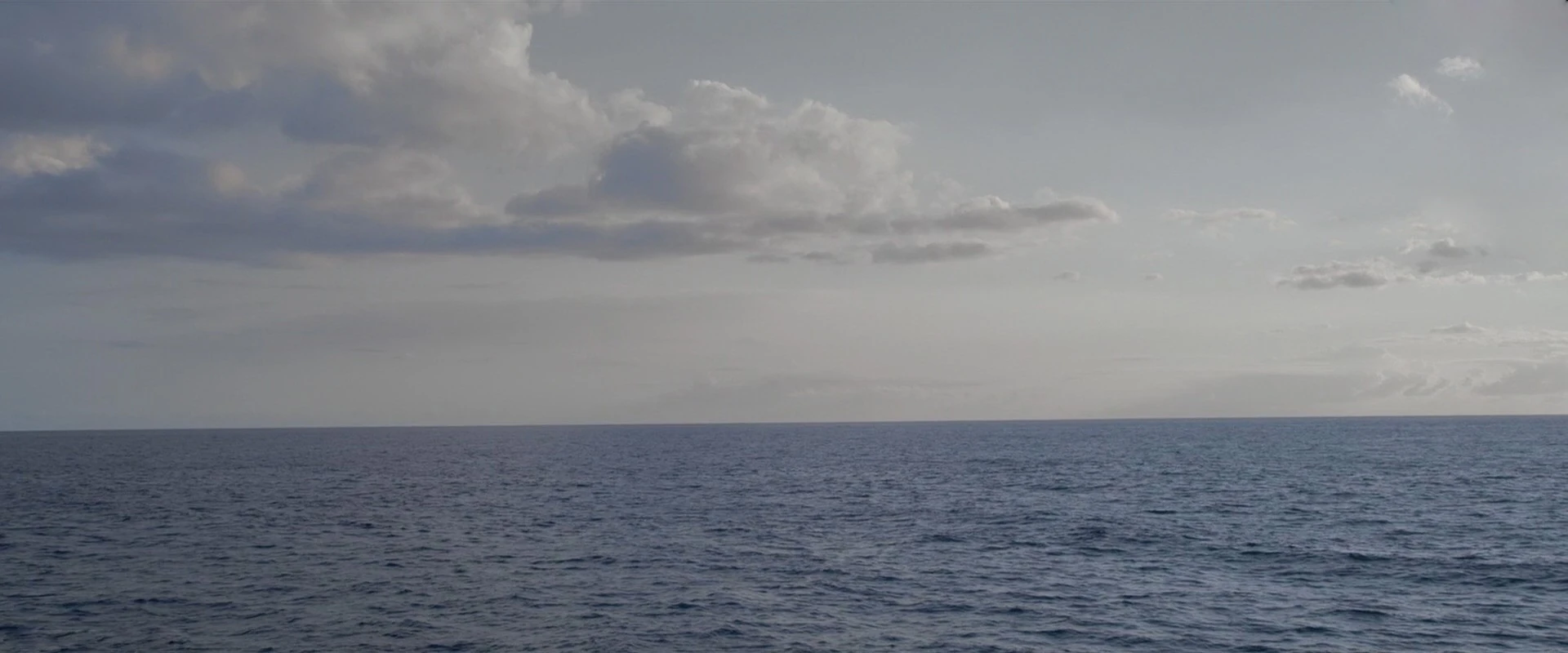
The Atlantic Ocean.
- "And the Royal Navy chasing us all around the Atlantic."
- ―Leech to Jack Sparrow
The Atlantic Ocean, also known as Mare Atlanticum, Ocean Occidental, Noort Zee, or simply the Atlantic, was the second-largest of the world's five oceanic divisions. It covered approximately 17% of Earth's surface and about 24% of its water surface area. During the Age of Discovery, it was known for separating the New World of the Americas (North America and South America) from the Old World (Africa, Asia, and Europe). The Atlantic Ocean occupied an elongated, S-shaped basin extending longitudinally between Europe and Africa to the east, and the Americas to the west. As one component of the interconnected world ocean, it was connected to the Pacific Ocean in the southwest, and the Indian Ocean in the southeast. The Atlantic Ocean is divided in two parts, the northern and southern Atlantic, by the Equator.
By the Age of Piracy, the Atlantic Ocean played a central role in the development of human society, globalization, and the histories of many nations, most notably Portugal, France, the Spanish and the British Empire. The Atlantic was a core component of trade around the world, the center of slave trade, while also occasionally hosting naval battles.
History
- "I'm not looking for trouble..."
"Oh, no, of course, now yer not. Now that you want to be shipmates across the wide Atlantic. Quite a long trip, mate." - ―Billy Turner and Mr. Hawk
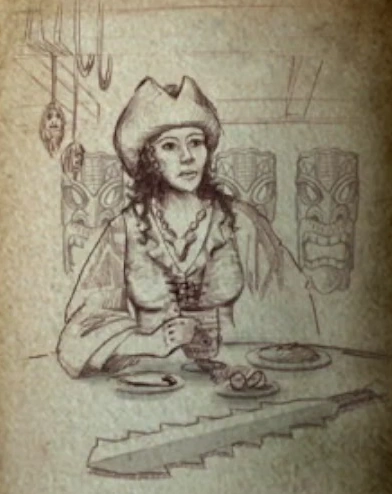
The Pirate Lord of the Atlantic was the first of the ones Davy Jones used to help bind Calypso into human form.
By the Age of Piracy, the Brethren Court existed at a time when the waters were untamed, the world a rougher place, and a sailor made his own fate. Prior to the First Court,[1][2] Davy Jones, the cursed captain of the Flying Dutchman, first searched for a woman, the first Pirate Lord of the Atlantic Ocean, who helped bound the sea goddess Calypso into human form, using secrets from the Journal of the Ancient Seas.[3] During the Second Court, Grandmama, the grandmother of the infamous Jack Sparrow, was the Lord of the Atlantic.[4] Around the time of the Fourth Court,[1][2] the Pirate Lords of the Atlantic were King Samuel and Gentleman Jocard, the latter being an escaped slave who took on the name of his former master,[5] with Jocard having claimed the title from Samuel.[4] With one of the Nine Pieces of Eight, tobacco cutters which were stolen from a British plantation on which he was enslaved,[6] which he took a particular revenge,[5] Jocard eventually became known as Terror of the Atlantic.[7]
Prior to meeting young Jack Sparrow, William "Bootstrap Bill" Turner, or "Billy Turner" in his youth, had sailed aboard the Sea Star in a trip across the wide Atlantic Ocean, serving as an assistant to the ship's cook, Mr. Hawk. The Sea Star carried Billy all the way from the Isle of Man to Bermuda.[8] Bootstrap Bill's son, Will Turner, was living in England until he went looking for his father,[9][10] boarding the merchant vessel Princess, which sailed in the Atlantic Ocean.[11] At some point in the voyage across the Atlantic to the Caribbean Sea, the merchant vessel was attacked by Captain Hector Barbossa and the crew of the Black Pearl, with young Turner and the ship's wreckage discovered by the HMS Dauntless as they made the crossing of England.[9][10]
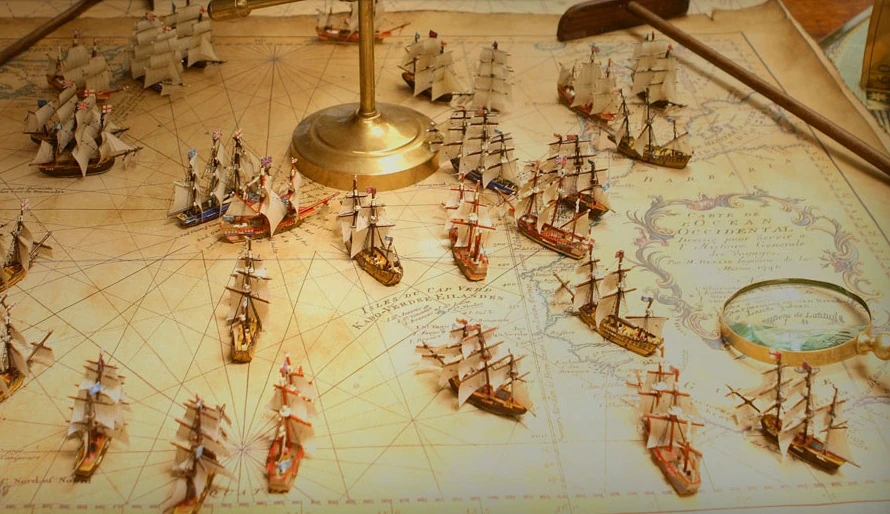
"Carte de l'Ocean Occidental" in Cutler Beckett's cabin.
By the search for the Dead Man's Chest and the war against piracy led by Lord Cutler Beckett of the East India Trading Company, a wide variety of vessels under the EITC and the British Royal Navy used to ply trade across the Atlantic and to hunt down any lingering pirate activity across the New World.[6] The Edinburgh Trader was a merchant ship plying an honest trade across the Atlantic.[12][6] The HMS Endeavor was a flagship of the British Naval forces sweeping the Atlantic under the auspices of the Company.[2][6] Captain Jack Sparrow and his crew aboard the Black Pearl were chased by the Royal Navy all around the Atlantic. The Black Pearl sailed across the Atlantic to the Turkish Prison, and later back to various islands of the Caribbean Sea. The Atlantic Ocean (named "Mare Atlanticum") was drawn onto a map of the world created in the EITC headquarters in Port Royal,[12][13][14][15] along with a smaller map in the captain's cabin of the Endeavour. A French map with the name "Ocean Occidental" was used to show the advance of the EITC armada in its ruthless campaign.[2]
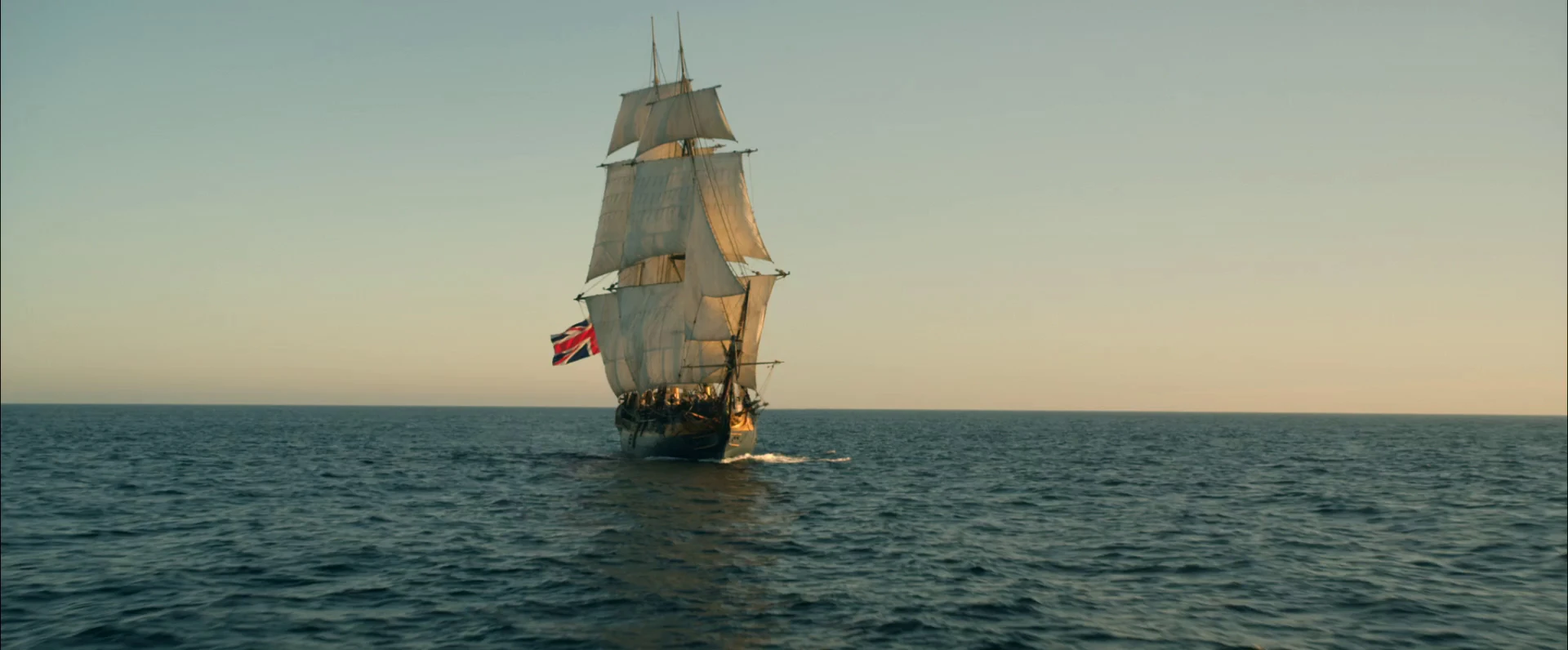
Several ships, including the HMS Providence, sailed across the Atlantic Ocean during the quest for the Fountain of Youth.
Nearly two hundred years after Spanish conquistador Juan Ponce de León began searching for the Fountain of Youth, a Spanish sailor was lost at sea until he was pulled from the Atlantic Ocean around 1750, when he was found by a captain and fisherman of a fishing boat as the last moments of sunset cast a faint orange glow across the dark waters of the Atlantic.[16] Around the same time, years after Captain Jack Sparrow set off in pursuit of the Fountain and the Black Pearl by himself, fortune sent Jack east across the Atlantic, and it was then he heard tell of Joshamee Gibbs' dire encounter with the authorities, and so Jack charted a course to London to effect the rescue of his devoted First Mate.[17] Afterwards, a perilous adventure ensued as Blackbeard's Queen Anne's Revenge, the HMS Providence, and three Spanish galleons sailed across the Atlantic Ocean in a race to the Fountain of Youth.[18]
Behind the scenes
The Atlantic Ocean was first pictured and identified as "Mare Atlanticum" on a map of the world featured in media relating to the 2006 film Pirates of the Caribbean: Dead Man's Chest.[12] The map would also be included in the reference books Pirates of the Caribbean: The Visual Guide (where it was also first identified as "Atlantic Ocean"),[13] The Complete Visual Guide,[14] and The Secret Files of the East India Trading Company.[15] The name "Ocean Occidental" was used on a map with miniature ship models showing the progress of Cutler Beckett's Armada in the 2007 film Pirates of the Caribbean: At World's End.[2] The name "Noort Zee" was used on a map used in The Pirates' Code Guidelines: A Booke for Those Who Desire to Keep to the Code and Live a Pirate's Life.[19] The Atlantic Ocean made its first confirmed appearance in the 2009 book Jack Sparrow: The Tale of Billy Turner and Other Stories.[20][8]
According to Ted Elliott and Terry Rossio's early screenplay draft for Pirates of the Caribbean: The Curse of the Black Pearl, the HMS Dauntless was sailing through the Caribbean Sea when it rescued Will Turner and encountered the burning wreck of a merchant vessel.[21] This was retained in the junior novelization.[10] However, in the 2006 German novelization, Will Turner recalled that the merchant ship, identified as the Princess, was boarded in the Atlantic Ocean.[11]
In Jeff Nathanson's early 2013 screenplay draft for Pirates of the Caribbean: Dead Men Tell No Tales, a battle was fought in 1756 between Captain Toms' British Navy warship the H.M.S. Monarch and Captain Thurot's French ship the Courageux in the North Atlantic.[22] By the final version of the film, which took place in 1751, the Monarch chased the pirate vessel the Ruddy Rose in the Caribbean Sea.[23]
Appearances
- Pirates of the Caribbean: Call of the Kraken (Mentioned only)
- Jack Sparrow: The Tale of Billy Turner and Other Stories (First appearance)
- The Price of Freedom
- Legends of the Brethren Court: Wild Waters
- Legends of the Brethren Court: Day of the Shadow
- Pirates of the Caribbean: The Legend of Jack Sparrow (Picture only) (Map only)
- Pirates of the Caribbean: Dead Man's Chest (Mentioned only)
- Pirates of the Caribbean: Dead Man's Chest (comic) (Picture only) (Map only)
- Pirates of the Caribbean: At World's End (Map only)
- Pirates of the Caribbean: On Stranger Tides
- The Brightest Star in the North: The Adventures of Carina Smyth
- LEGO Pirates of the Caribbean: The Video Game (Non-canonical appearance)
Sources
- DisneyPirates.com
- Pirates of the Caribbean: The Visual Guide (First pictured) (First identified as Atlantic Ocean and Mare Atlanticum)
- Pirates of the Caribbean: The Complete Visual Guide
- The Pirates' Guidelines (First identified as Noort Zee)
- Pirates of the Caribbean: At World's End: "Inside the Brethren Court"
- Disney Second Screen: Pirates of the Caribbean: On Stranger Tides
External links


Notes and references
- ↑ 1.0 1.1 The Pirates' Guidelines
- ↑ 2.0 2.1 2.2 2.3 2.4 Pirates of the Caribbean: At World's End
- ↑ Pirates of the Caribbean: Call of the Kraken
- ↑ 4.0 4.1 Legends of the Brethren Court: Wild Waters
- ↑ 5.0 5.1 Pirates of the Caribbean: At World's End
- ↑ 6.0 6.1 6.2 6.3 DisneyPirates.com
- ↑ Pirates of the Caribbean: The Complete Visual Guide, pp. 90-91: "Pirate Lords"
- ↑ 8.0 8.1 Jack Sparrow: The Tale of Billy Turner and Other Stories, pp. 33-47
- ↑ 9.0 9.1 Pirates of the Caribbean: The Curse of the Black Pearl
- ↑ 10.0 10.1 10.2 Pirates of the Caribbean: The Curse of the Black Pearl (2006 junior novelization), pp. 1-6
- ↑ 11.0 11.1 Fluch der Karibik - Der Roman zum ersten Kinofilm, p. 139
- ↑ 12.0 12.1 12.2 Pirates of the Caribbean: Dead Man's Chest
- ↑ 13.0 13.1 Pirates of the Caribbean: The Visual Guide
- ↑ 14.0 14.1 Pirates of the Caribbean: The Complete Visual Guide
- ↑ 15.0 15.1 The Secret Files of the East India Trading Company
- ↑ Pirates of the Caribbean: On Stranger Tides (junior novelization), p. VI
- ↑ Disney Second Screen: Pirates of the Caribbean: On Stranger Tides
- ↑ Pirates of the Caribbean: On Stranger Tides
- ↑ The Pirates'
CodeGuidelines: A Booke for Those Who Desire to Keep to the Code and Live a Pirate's Life, p. 62 - ↑ Jack Sparrow: The Tale of Billy Turner and Other Stories, p. 26
- ↑ Wordplayer.com: PIRATES OF THE CARIBBEAN: THE CURSE OF THE BLACK PEARL by Ted Elliott & Terry Rossio
- ↑ Pirates of the Caribbean: Dead Men Tell No Tales script by Jeff Nathanson, second draft, 5/6/2013
- ↑ Pirates of the Caribbean: Dead Men Tell No Tales
