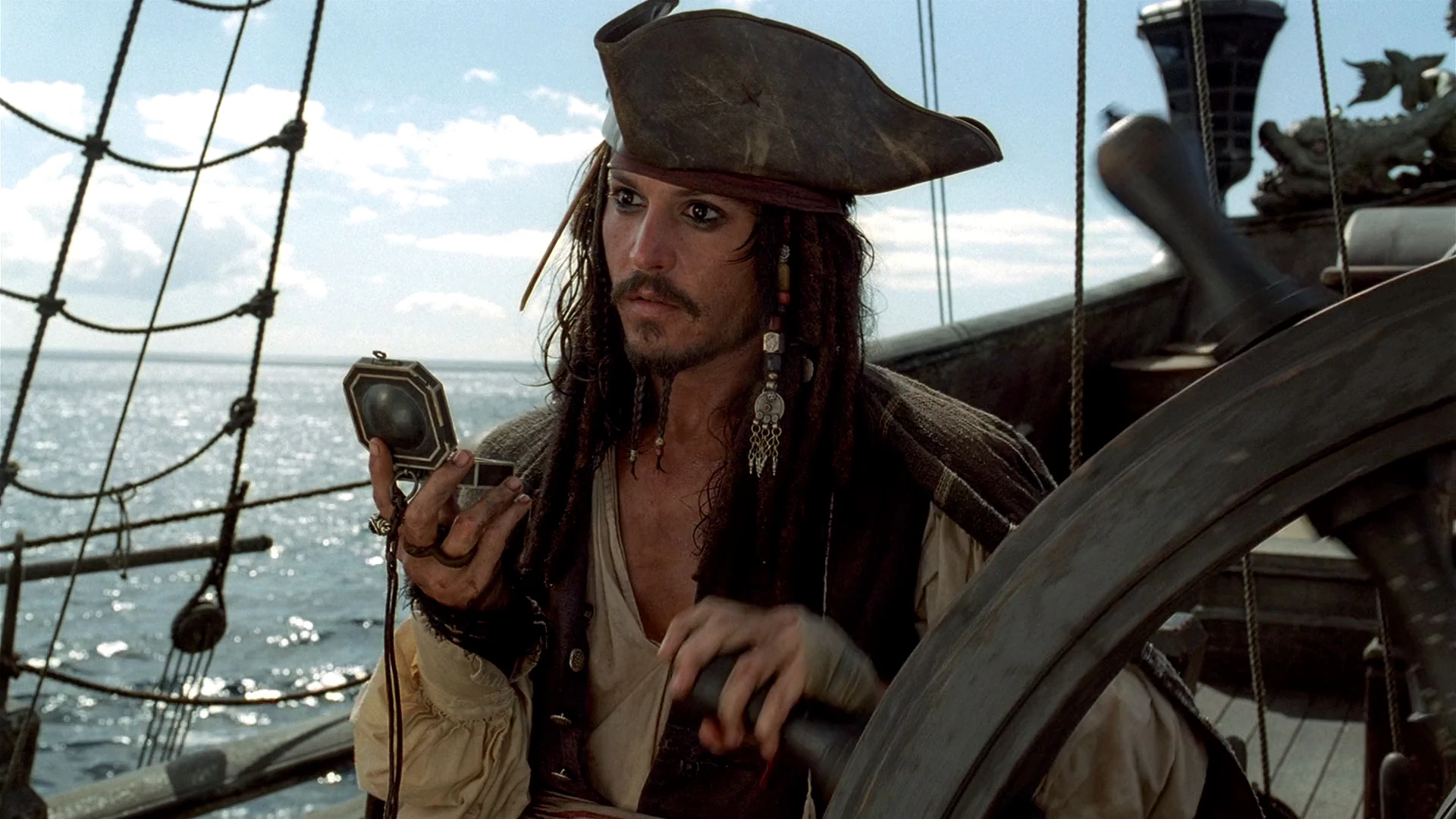
Captain Jack Sparrow was a pirate who loved and desired freedom more than any material treasure. He also believed that his ship, the Black Pearl, was freedom.
- "Jack will be free, a privateer in the employ of England."
"Somehow I doubt Jack will consider employment the same as being free."
"Freedom." - ―Cutler Beckett and Will Turner
Freedom was the power or right to speak, act, and change as one wants without hindrance or restraint. Freedom was often associated with liberty and autonomy in the sense of "giving oneself one's own laws". In its origin, the definition of the English word "freedom" relates etymologically to the word "friend". Philosophy and religion sometimes associate it with free will, as an alternative to determinism or predestination.
History
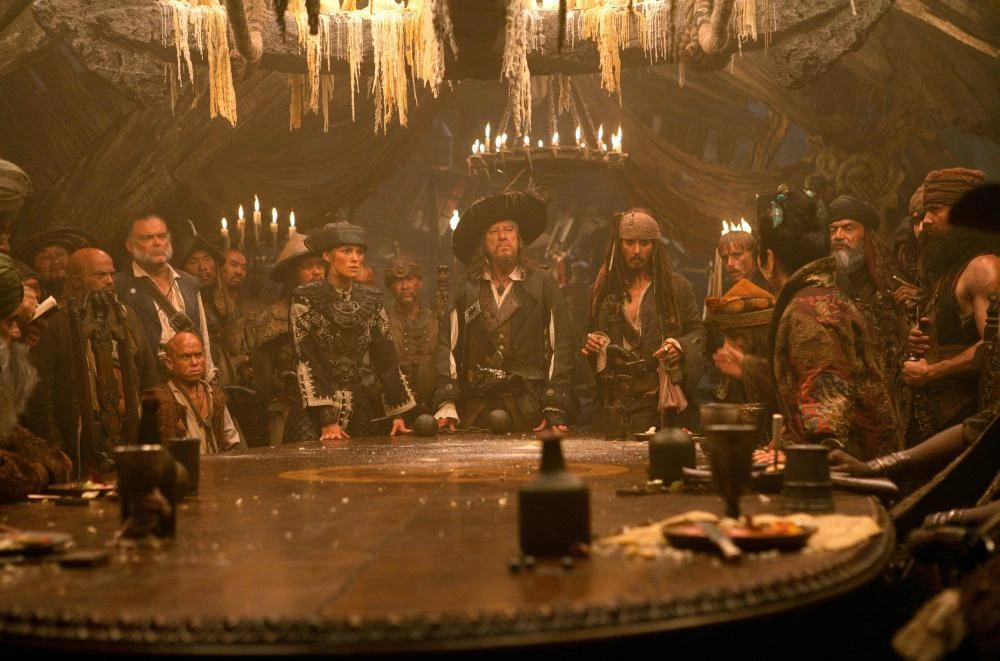
During the Age of Piracy, it was believed that pirates or those living the pirate's life represented freedom.
- "One word, love. Curiosity. You long for freedom. You long to do what you want to do because you want it. To act on selfish impulse. You want to see what it's like. One day you won't be able to resist."
- ―Jack Sparrow to Elizabeth Swann
By the Age of Piracy, the supposed freedom and wealth of piracy offered sailors an escape from oppression and poverty. Not all who sailed under the Jolly Roger, however, freely chose to navigate their vicious course. Gunners, surgeons, sail makers, and boatswains received good wages and enjoyed adequate living conditions in honest service. Many sea-artists, as these professional men were called, were captured by pirates and forced to serve because their skills were always in demand.[1] It was also believed that piracy represented freedom, with the two terms were often strongly correlated and associated, and whether it was a specific ship or the ability to determine one's own fate, there was something about the freewheeling world of buccaneers and leading the pirate life that gave free spirits a sense of true freedom.[2][3][4]
The Pirata Codex, a book in the care of Captain Teague, a legendary pirate who was Jack Sparrow's father[4][5] as well as a member of the Brethren Court as the Keeper of the Code and Pirate Lord of Madagascar,[6] had a section that was all about freedom and the need for a pirate to make decisions for himself. After reading that passage, young Jack Sparrow decided that clearly gave him justification to leave his family. However, after sneaking away, he realized his freedom came with a heavy price. Without "The-Man-Who-Might-Be-Dad", who was always by his side when he needed him most, Jack had to go through life alone, and he wasn't sure if he was ready for that kind of freedom.[5]
At the beginning of the quest for the Sword of Cortés, upon meeting the barmaid Arabella Smith in Tortuga and learning about the Sword, Jack convinced her to join him because the legendary weapon would bring them freedom and power.[7] Around the same time, the notorious supernatural pirate Captain Torrents ended up serving against his will aboard the infamous ghost ship, the Flying Dutchman, until he made a deal with the ship's cursed captain, Davy Jones, promising to bring the Sword of Cortés and its scabbard in exchange for his freedom.[8] During the quest, the crew of the Barnacle fell victim to the siren song somewhere in the Caribbean Sea, where the haunting melody was used by the merfolk of Isla Sirena in an attempt to kill them all. Jack Sparrow confronted the mermaid leaders of Isla Sirena, Morveren, Aquala, and Aquila, and managed to convince them to release his crew from their spell in exchange for his greatest treasure. Only after he left Stone-Eyed Sam's stone eye as collateral with the promise to come back, Jack realized his greatest treasure was his freedom, and he had foolishly traded it away.[9]
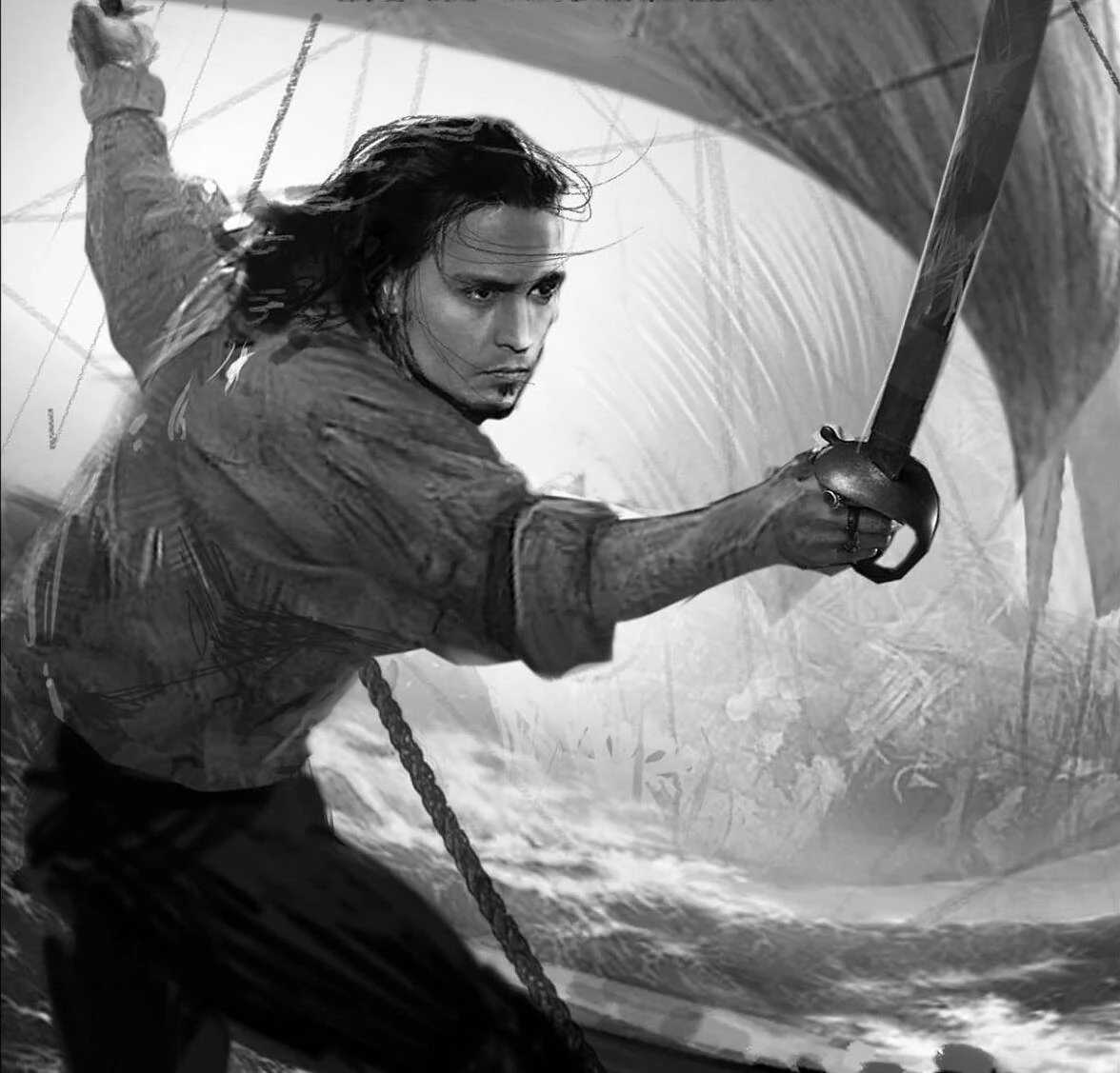
When Jack Sparrow was a merchant seaman for the East India Trading Company, Cutler Beckett took away the thing that Sparrow loved most: his ship and his freedom.
The society of the legendary magical island of Kerma was almost a copy of ancient Egypt. As such, Kermans practiced slavery for thousands of years. However, after the Princess Amenirdis experienced the horrors of slavery first hand, living imprisoned in Calabar as the property of rich white men, Roger Dalton and Cutler Beckett, she swore she would free all of Kerma's slaves if she ever returns home. With the help of Jack Sparrow, then a merchant seaman for the East India Trading Company under Beckett, Amenirdis returned to Kerma with her long lost brother Shabako, who was freed from slavery in the Bahamas. Once he was crowned as the new Pharaoh, Shabako's first royal proclamation was that all the slaves on the island would be declared free within one year.[10] Some time later, Cutler Beckett, the ETIC Director for West Africa, forced Jack to take almost two hundred slaves aboard his ship, the merchant vessel Wicked Wench, to transport to the island of New Avalon in the Bahamas, for the plantation of Buckett's superior, Lord Reginald Marmaduke Bracegirdle-Penwallow. However, in the middle of the voyage, Jack decided to free the slaves, and sailed the Wench for Kerma, where the young pharaoh gave them asylum. Jack's actions eventually cost him his own freedom, because he was captured by the greedy East India Trading Company official.[11]
During the quest for the Shadow Gold, upon meeting Captain Jack Sparrow and the crew of the Black Pearl, the Spanish princess Carolina believed the whole point of being a pirate was freedom.[12] Gombo, a runaway slave to took the name of his former master Gentleman Jocard,[13][14] and later the Pirate Lord of the Atlantic Ocean,[13][15] turned to piracy as a means of ensuring his continued freedom.[16]
During the War of Jolly Roger, at the end of the Golden Age of Buccaneers, as the armadas of Western Europe struggle to tame the wilds of the New World, the last of the great pirates of the Caribbean and their mighty ships must wage epic battles for freedom, even as they were caught between encroaching civilization and awesome power of the living myths and legends of the Seven Seas.[17][18]
Captain Jack Sparrow was a free-spirited pirate who valued freedom above all else and found that he loved and desired it more than any material treasure.[19] He famously viewed the Black Pearl as representing freedom itself,[2][3] possibly due to using his precious ship, previously known as the merchant vessel Wicked Wench, to free slaves when he was a sailor for the East India Company.[20][21] Jack would often shout "You will always remember this as the day you almost caught Captain Jack Sparrow!" or any variation of the declaration,[3][22] mocking those who failed to deprive him of his freedom.[23] A sparrow meant "freedom" and also indicated that a sailor had traveled a considerable amount of nautical miles,[24] with Jack's tattoo being a symbol that testified that he sailed in all the oceans of the world many times over.[13] During the war between the East India Trading Company and the Fourth Brethren Court, which was itself a war for the pirates to preserve their freedom, the reason Jack so strongly desired to stab Davy Jones' heart and take his place as the immortal captain of the Flying Dutchman was to "be free forever" and be "free from death itself". Prior to the battle between the Brethren and the EITC, Elizabeth Swann gave a speech to the crew of the Black Pearl, saying the Brethren would see free men, and freedom, against the enemy.[4]
Behind the scenes
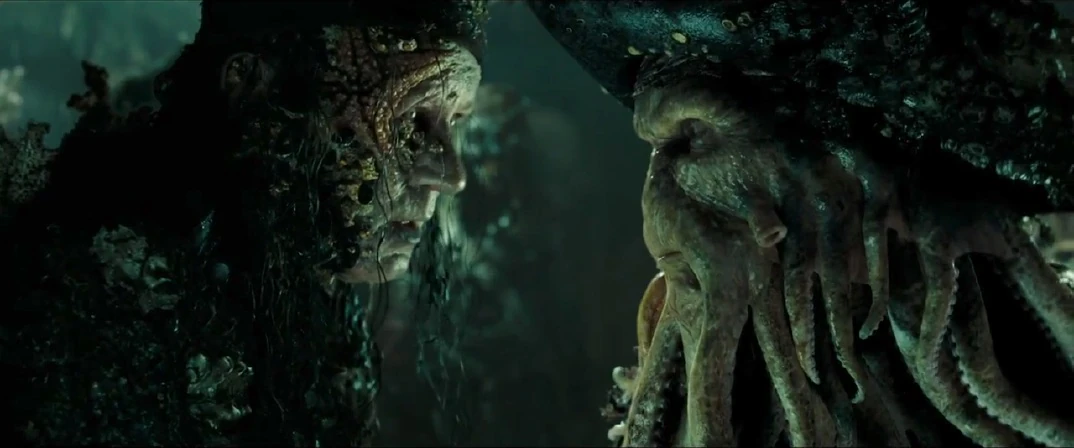
Will Turner freed his father Bootstrap Bill from the cursed Davy Jones in a scene cut from Dead Man's Chest.
- "What we like about pirates is that they represent freedom."
- ―Ted Elliott
Freedom was first mentioned in the souvenir book for Walt Disney's Pirates of the Caribbean.[1] Following the development of the Pirates of the Caribbean film franchise, pirates represented freedom,[25][26] with the term notably making its first appearance in media relating to the 2003 film Pirates of the Caribbean: The Curse of the Black Pearl,[3] notably Irene Trimble's junior novelization.[2]
In Ted Elliott and Terry Rossio's screenplay for Pirates of the Caribbean: Dead Man's Chest, Will Turner played Liar's Dice with Davy Jones two times, with Will beating Jones the first time and winning his father Bootstrap Bill's freedom.[27] The scene never made it to the final cut of the film,[22] but was retained in the junior novelization,[28] as well as the deleted scene "Married To The Ship" featured in Blu-ray releases beginning in 2011.[29]
In the 2017 film Pirates of the Caribbean: Dead Men Tell No Tales, when Shansa the sea witch is brought to Carina Smyth's prison cell, Lieutenant Scarfield orders her to decipher the carvings on the wall. Shansa then proclaims that his destiny is in the stars.[30] However, in the French novelization, Shansa demands freedom in exchange for her services.[31]
Appearances
- Walt Disney's Pirates of the Caribbean (First appearance)
- Jack Sparrow: The Coming Storm
- Jack Sparrow: The Siren Song
- Jack Sparrow: The Pirate Chase
- Jack Sparrow: The Sword of Cortés
- Jack Sparrow: City of Gold
- Jack Sparrow: Dance of the Hours
- Jack Sparrow: Sins of the Father
- Jack Sparrow: Bold New Horizons
- Jack Sparrow: The Tale of Billy Turner and Other Stories
- The Price of Freedom
- Legends of the Brethren Court: The Caribbean
- Legends of the Brethren Court: Rising in the East
- Legends of the Brethren Court: The Turning Tide
- Legends of the Brethren Court: Wild Waters
- Legends of the Brethren Court: Day of the Shadow
- Pirates of the Caribbean: The Curse of the Black Pearl
- Disney Adventures: "Enter... the Scarecrow!"
- Disney Adventures: "Revenge of the Pirates!"
- Disney Adventures: "A Revolting Development!"
- Disney Adventures: "The Star of the Seas"
- Pirates of the Caribbean: Dead Man's Chest
- Pirates of the Caribbean: At World's End
- Pirates of the Caribbean: On Stranger Tides
- Pirates of the Caribbean: Dead Men Tell No Tales
- Pirates of the Caribbean: Dead Men Tell No Tales Novelization
- Pirates des Caraïbes : La Vengeance de Salazar
- Kingdom Hearts II (Non-canonical appearance)
- Kingdom Hearts III (Non-canonical appearance)
- LEGO Pirates of the Caribbean: The Video Game (Non-canonical appearance)
- Sea of Thieves: A Pirate's Life (Non-canonical appearance)
- Fortnite (Non-canonical appearance)
Sources
- Walt Disney's Pirates of the Caribbean: The Story of the Robust Adventure in Disneyland and Walt Disney World (First identified as freedom)
- The Pirates' Guidelines
- The Secret Files of the East India Trading Company
External links


Notes and references
- ↑ 1.0 1.1 Walt Disney's Pirates of the Caribbean: The Story of the Robust Adventure in Disneyland and Walt Disney World, p. 5
- ↑ 2.0 2.1 2.2 Pirates of the Caribbean: The Curse of the Black Pearl (2003 junior novelization), p. 94
- ↑ 3.0 3.1 3.2 3.3 Pirates of the Caribbean: The Curse of the Black Pearl
- ↑ 4.0 4.1 4.2 Pirates of the Caribbean: At World's End
- ↑ 5.0 5.1 Jack Sparrow: Sins of the Father, pp. 3-5
- ↑ The Price of Freedom, Chapter Eight: The Devil in the Deep Blue Sea
- ↑ Jack Sparrow: The Coming Storm, p. 29
- ↑ Jack Sparrow: The Coming Storm, pp. 126-128
- ↑ Jack Sparrow: The Siren Song, pp. 110-115
- ↑ The Price of Freedom, Chapter Fifteen: Kerma
- ↑ The Price of Freedom, Chapter Eighteen: Exodus
- ↑ Legends of the Brethren Court: The Turning Tide, pp. 73-74
- ↑ 13.0 13.1 13.2 Pirates of the Caribbean: At World's End: "Inside the Brethren Court"
- ↑ Legends of the Brethren Court: The Caribbean, p. 226
- ↑ Legends of the Brethren Court: Wild Waters, p. 174
- ↑ The Secret Files of the East India Trading Company, The Brethren Court
- ↑ Pirates of the Caribbean Online
- ↑ The Game | Disney's Pirates of the Caribbean Online (backup link archived on May 26, 2006)
- ↑ Jack Sparrow: Bold New Horizons
- ↑ Legends of the Brethren Court: The Caribbean, p. 16
- ↑ Legends of the Brethren Court: The Caribbean, p. 121
- ↑ 22.0 22.1 Pirates of the Caribbean: Dead Man's Chest
- ↑ Legends of the Brethren Court: Day of the Shadow, Epilogue
- ↑ The Pirates' Guidelines, p. 34
- ↑ POTC2 Presskit
- ↑ POTC3 Presskit
- ↑ Wordplayer.com: PIRATES OF THE CARIBBEAN: DEAD MAN'S CHEST by Ted Elliott & Terry Rossio
- ↑ Pirates of the Caribbean: Dead Man's Chest (junior novelization), pp. 100-101
- ↑ Pirates of the Caribbean: Dead Man's Chest Deleted Scene: "Married To The Ship"
- ↑ Pirates of the Caribbean: Dead Men Tell No Tales
- ↑ Pirates des Caraïbes : La Vengeance de Salazar - Le roman du film, pp. 98-99