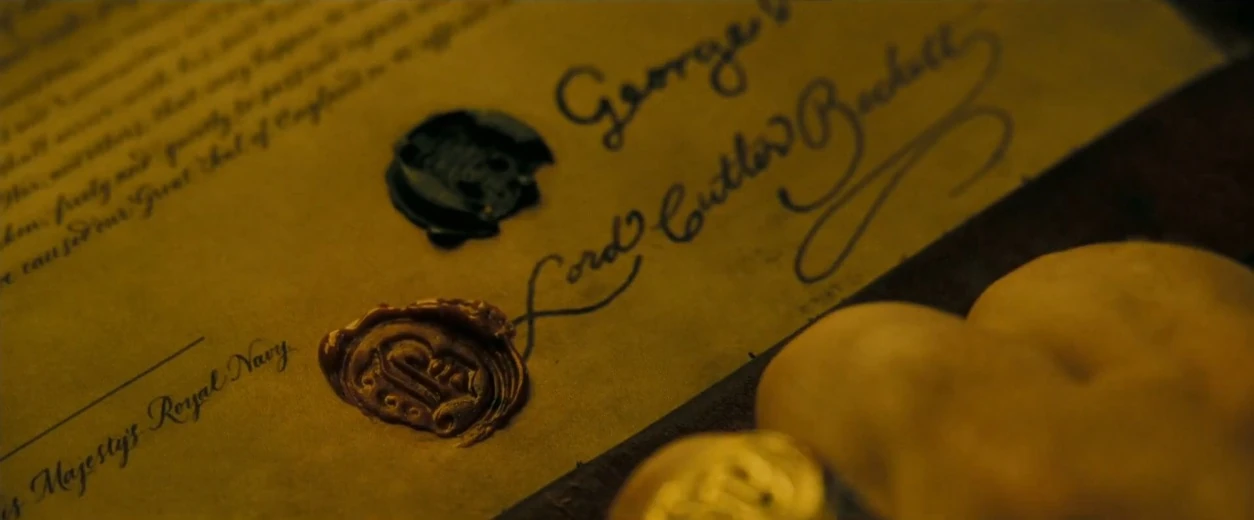

Lord Cutler Beckett seals the Letters of Marque with his signet ring.
- "No watch with an incerdibly convenient inscription. Like, 'To Edward. P. Seafluke―if lost, please return to 100 Oxford Street, London.' Not even a blasted signet ring."
- ―Jack Sparrow's complaints about Bill Turner
A signet ring was a special ring used as a symbol of authority or family ties.
History
When young Jack Sparrow found Billy Turner unconscious on a beach of a desert island, Sparrow loudly complained about not finding anything to identify Turner with, including a signet ring.[1] Many years later, the Pirate Lord of the Caribbean, Lady Esmeralda, owned a signet ring which she used to stamp her letters.[2] Lord Cutler Beckett of the East India Trading Company used a signet ring to seal the Letters of Marque which were stolen by Elizabeth Swann.[3] Beckett continued wearing the ring for the rest of the War Against Piracy.[4]
Behind the scenes
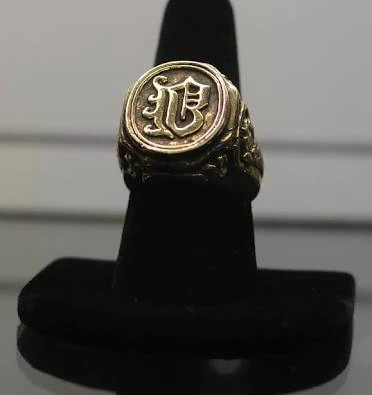

Lord Cutler Beckett's signet ring.
- "We're missing one. Where be the ring?"
"I don't have it."
"What?" - ―Barbossa, Chevalle, and Jack Sparrow
Signet rings first appeared in the 2006 film Pirates of the Caribbean: Dead Man's Chest.[3] The term "signet ring" was first used in the 2008 book Jack Sparrow: Poseidon's Peak by Rob Kidd.[1]
In Ted Elliott and Terry Rossio's first screenplay draft of Pirates of the Caribbean: At World's End, Cutler Beckett's signet ring was one of the Nine Pieces of Eight. Originally owned by the Portuguese sailor Ferdinand Magellan, it was given to Capitaine Chevalle as a sign of Pirate Lordship by his father's father, but he lost it to Beckett in a game of cards in the South China Sea some years prior to the Brethren Court meeting. In the end, Barbossa used Beckett's Letters of Marque in the ritual to free Calypso, because they were sealed with the ring, and the magic from the ring remained in the wax seal.[5]
Appearances
- Jack Sparrow: Poseidon's Peak (Mentioned only) (First identified as signet ring)
- The Price of Freedom
- Pirates of the Caribbean: Dead Man's Chest (First appearance)
- Pirates of the Caribbean: At World's End