 |
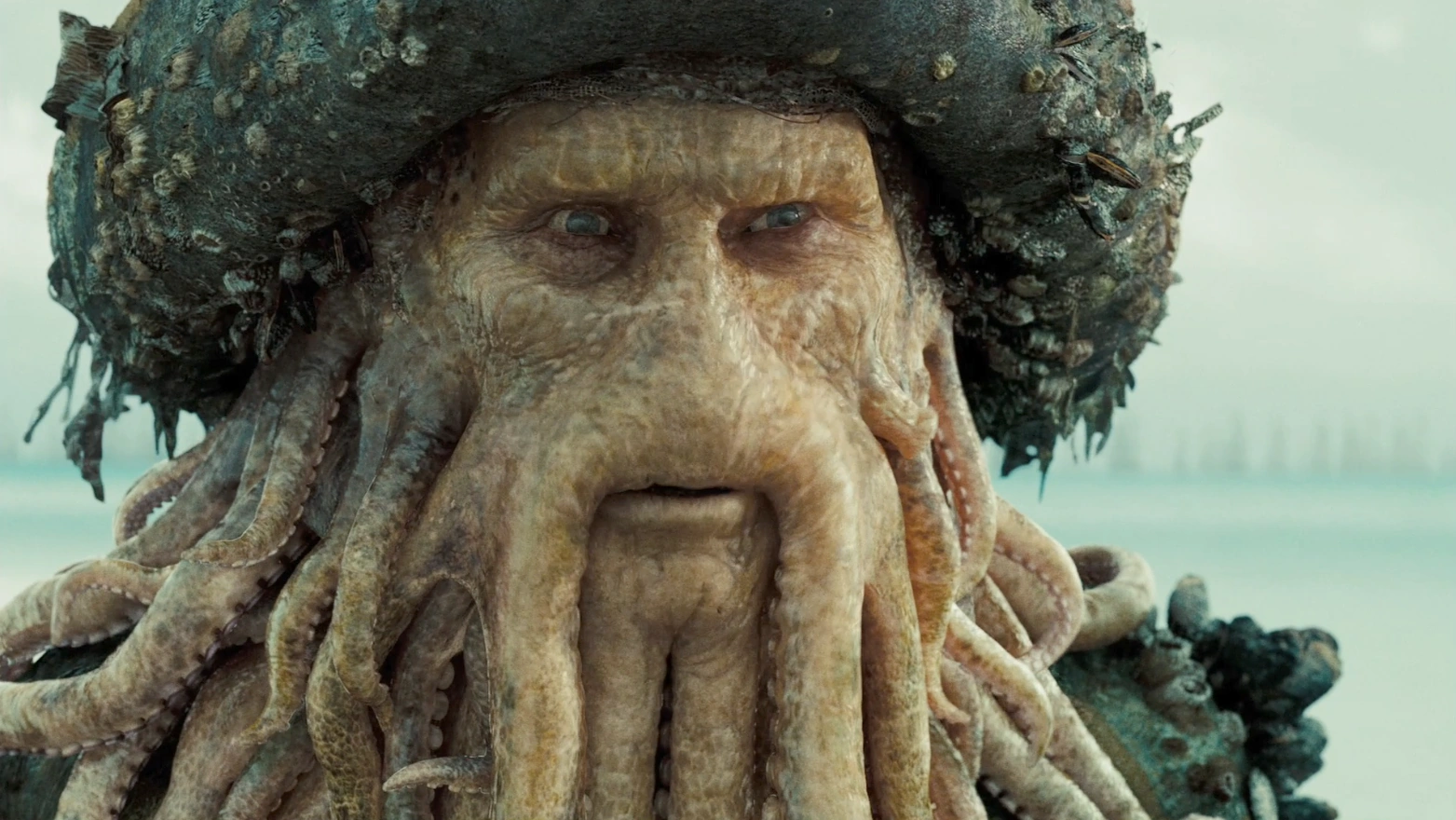
Davy Jones, the cursed captain of the Flying Dutchman, occasionally made deals, after which he is owed a debt.
- "One hundred years before the mast, losing who you were, bit by bit, until you end up... end up like poor Wyvern here. Once you've sworn an oath to the Dutchman, there's no leaving it. Not until your debt is paid."
- ―Bootstrap Bill Turner
Debt is an obligation that requires one party, the debtor, to pay money or other agreed-upon value to another party, the creditor. It is a deferred payment, or series of payments, which differentiates it from an immediate purchase. The debt may be owed by country, local government, company, or an individual. Loans, bonds, notes, and mortgages are all types of debt. The term can also be used metaphorically to cover moral obligations and other interactions not based on a monetary value. For example, a person who has been helped by a second person is sometimes said to owe a "debt of gratitude" to the second person.
History
In the days of myth and legend, Calypso gave Davy Jones the sacred task of ferrying all the souls who died at sea, because of their love, Jones agreed to set foot on dry land once every ten years, and if this love was true to him, his task would be complete, and a new captain of the Flying Dutchman would be found.[1] But when Davy Jones came ashore, Calypso was nowhere to be found, and Jones plotted with the Brethren Court to trick the sea goddess and bound her into human form, eventually the voodoo mystic Tia Dalma.[2][3] Jones tore his own heart from his body, locked it in a chest,[4] and then returned to the seas as the cursed captain of the Flying Dutchman, with Jones using the ship to offer dying sailors the choice to become a member of his crew,[5][6] remaining a part of the ship until their debt was paid.[2]
While Jack Sparrow pursued a legitimate career as a merchant seaman for the East India Trading Company, he handled "an uncomfortable, inherently dangerous situation" and thus saved a considerable sum of money, which Cutler Beckett came to the conclusion that the EITC owed Sparrow a debt. Sparrow told Beckett a story about the ghost of his old fencing Master from Marseilles, claiming that Sparrow didn't pay his bill, let Marseilles, and returned to settle his debt, only to discover that the fencing master had died. Later, upon being branded as a pirate, Jack Sparrow made a deal with Davy Jones to raise his sunken ship, the EITC merchant vessel Wicked Wench, later rechristened as Black Pearl, in exchange for his soul,[7] a debt he would repay within thirteen years.[2]
Almost thirteen years later, while Captain Jack Sparrow recruited a crew at Interceptor at Tortuga during a quest to reclaim the Black Pearl, Anamaria believed that Jack has a debt to repay after he stole her boat,[8][9] the Jolly Mon.[5][6] Within the year, Sparrow owed his debt to Davy Jones and tried to avoid the Kraken and being sent to Davy Jones' Locker.[4][2] Although the debt was settled by Sparrow being sent to the Locker, he was rescued, leaving Jones to believe that the escape meant the debt was not paid.[3]
By the quest for the Trident of Poseidon, a down-on-his-luck Jack Sparrow owed a debt to Pierre "Pig" Kelly, who forced Sparrow to marry his sister Beatrice at Hangman's Bay.[10]
Behind the scenes
Although debts first appeared in media relating to the 2003 film Pirates of the Caribbean: The Curse of the Black Pearl,[9] it was not identified as such until it was detailed in the reference book Pirates of the Caribbean: The Visual Guide.[5] Debts made a more notable appearance in media relating to the 2006 film Pirates of the Caribbean: Dead Man's Chest.[11][2]
In Ted Elliott and Terry Rossio's screenplay draft of The Curse of the Black Pearl, as Jack Sparrow, Will Turner, and Elizabeth Swann race through Isla de Muerta, Jack decided to stay behind and keep Captain Barbossa's cursed pirates busy while Will and Elizabeth go on to the Interceptor. Will asked Jack if he was sure, Jack responded, "When you've led the kind of life that I have, there are debts that must be paid. Maybe I can balance the scales a little."[12]
In Ted Elliott and Terry Rossio's first screenplay draft of Pirates of the Caribbean: At World's End, as the Hai Peng sails to the edge of the world, Will Turner and Elizabeth Swann ask Tia Dalma why she joined their voyage, to which she replies, "I am owed many debts, with Jack Sparrow not the least among the debtors. I can hardly collect from a man not of this world." Later, when Will Turner led the East India Trading Company Armada to Shipwreck Island, Cutler Beckett acknowledged he was in his debt and gave him Norrington's sword as a small gesture of thanks.[13]
Appearances
- Jack Sparrow: The Sword of Cortés
- Jack Sparrow: Silver
- The Price of Freedom
- Legends of the Brethren Court: Rising in the East
- Legends of the Brethren Court: The Turning Tide
- Legends of the Brethren Court: Wild Waters
- Pirates of the Caribbean: The Curse of the Black Pearl
- Disney Adventures: "The Dark Skull"
- Disney Adventures: "Double Duel!" (Mentioned only)
- Pirates of the Caribbean Online
- Pirates of the Caribbean: Dead Man's Chest
- Pirates of the Caribbean: At World's End
- The Brightest Star in the North: The Adventures of Carina Smyth
- Pirates of the Caribbean: Dead Men Tell No Tales
- Pirates of the Caribbean: Dead Men Tell No Tales Novelization
- Pirates des Caraïbes : La Vengeance de Salazar
- Pirates of the Caribbean: Dead Men Tell No Tales: Movie Graphic Novel
Sources
- Pirates of the Caribbean: The Visual Guide (First identified as debt)
- Pirates of the Caribbean: The Complete Visual Guide
External links


Notes and references
- ↑ Pirates of the Caribbean: At World's End (video game)
- ↑ 2.0 2.1 2.2 2.3 2.4 Pirates of the Caribbean: Dead Man's Chest
- ↑ 3.0 3.1 Pirates of the Caribbean: At World's End
- ↑ 4.0 4.1 Pirates of the Caribbean: Dead Man's Chest (junior novelization)
- ↑ 5.0 5.1 5.2 Pirates of the Caribbean: The Visual Guide
- ↑ 6.0 6.1 Pirates of the Caribbean: The Complete Visual Guide
- ↑ The Price of Freedom
- ↑ Pirates of the Caribbean: The Curse of the Black Pearl (2003 junior novelization)
- ↑ 9.0 9.1 Pirates of the Caribbean: The Curse of the Black Pearl
- ↑ Pirates of the Caribbean: Dead Men Tell No Tales
- ↑ The Pirates of the Caribbean Sequel Teaser! - ComingSoon.net (December 1, 2006) - Archived
- ↑ Wordplayer.com: WORDPLAY/Archives/Screenplay - PIRATES OF THE CARIBBEAN: THE CURSE OF THE BLACK PEARL by Ted Elliott & Terry Rossio
- ↑ PIRATES OF THE CARIBBEAN: AT WORLD'S END by Ted Elliott & Terry Rossio, original draft